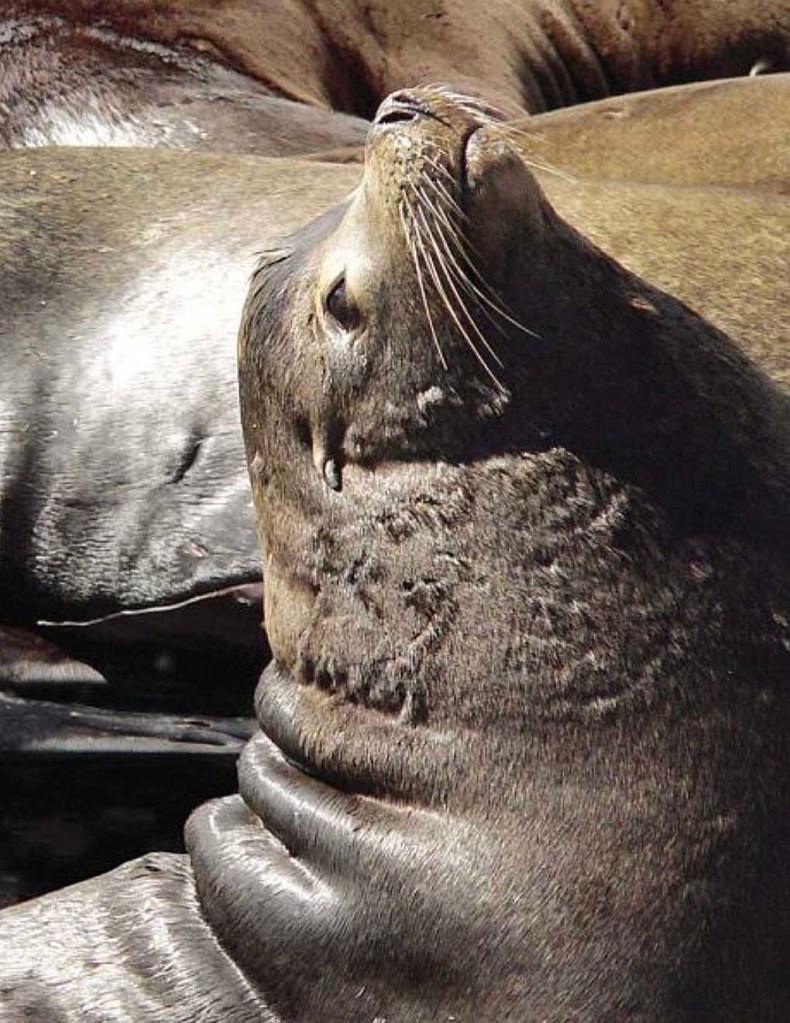
Efforts Mostly Center on Killing Animals to Preserve Salmon
The U.S. House of Representatives’ Committee on Natural Resources held a nearly two-and-a-half-hour hearing last week to address the growing problem of salmon-eating sea lions in the Columbia River. After assessing the dramatic increase in the sea lion population throughout the Pacific Northwest, the meeting focused on the effectiveness of legislative efforts—primarily centered on culling the animals.
Killing sea lions has largely become a less controversial approach as alternative solutions to salmon extinction have struggled to gain traction, making sea lions an obvious target. Earlier this year, this culminated in the reapproval of the federal permit allowing Northwest states and some Native nations to trap and kill sea lions in the Columbia River—with almost no opposition.
‘Numbers So Small?’
The reapproved permit authorizes the removal of hundreds of sea lions not killed under the 2020 approval, extending the allowance through 2030. During the hearing, Rep. Marie Gluesenkamp Perez (D-Skamania) questioned why so few of the initially authorized 716 sea lions had been removed.
“Ask yourself, why? Why are these numbers so small?” Perez challenged a senior official from the National Oceanic and Atmospheric Administration (NOAA) Fisheries. “The arduous process of removal is a key feature.”
Perez’s office estimates it costs approximately $38,000 to remove each sea lion from the Columbia River—translating to about $203 spent by state and federal governments for every salmon saved through these killings.
Inter-Tribal Perspectives
Between 2008 and this fall, the Columbia River Inter-Tribal Fishing Commission’s sea lion removal program has taken out 515 sea lions, which has resulted in saving over 100,000 fish. Executive Director Aja DeCoteau testified during the hearing on behalf of four Columbia Basin Native nations, emphasizing their treaty-reserved rights.
“Historically, our elders remember an occasional sea lion reaching Celilo Falls,” DeCoteau said. “However, these occurrences were rare. Now, a combination of hydro-system infrastructure, changing environmental conditions, and the success of the Marine Mammal Protection Act has resulted in unprecedented numbers of sea lions in the Columbia River.”
The Marine Mammal Protection Act of 1972 was enacted to safeguard marine mammals such as sea lions. However, sport fishing groups, Native nations, and salmon advocates argue that it has contributed to an ecosystem imbalance in recent decades.
Rising Sea Lion Numbers
NOAA Fisheries documented the first three Steller sea lions at Bonneville Dam in 2003. Fifteen years later, the agency observed at least 66 sea lions at the dam in a single day. Over the past decade, the population of California sea lions in the Columbia River basin surged from fewer than 500 to about 4,000.
DeCoteau urged Congress to increase removal efforts and support further research into this growing issue. She emphasized that the commission does not intend to manage sea lion populations indefinitely.
“Lethal removals of animals with this learned behavior will minimize predation now and prevent new sea lions from establishing this pattern in the future,” she said.
Recovery Efforts Undermined
Larry Phillips, Pacific Fisheries Policy Director for the American Sportfishing Association, also testified at the hearing. He highlighted that sea lions are undermining salmon restoration spending in the Columbia River.
Research indicates that federal and state agencies have invested approximately $9 billion addressing salmon recovery over the past 40 years. Critics note that this figure includes indirect costs, such as lost power generation.
Phillips concluded by urging Congress to update the Marine Mammal Protection Act to permit sea lion removal in Columbia River hotspots and surrounding areas.
“We must also be honest: continuing to spend billions on recovery and continually restricting fisheries without meaningfully addressing predation will produce a predictable outcome that will not result in recovery,” Phillips stated.
About the project: The Murrow News Fellowship is a state-funded journalism project managed by Washington State University. Local participants include the Chinook Observer, The Columbian, and The Daily News.
https://chinookobserver.com/2025/12/14/congress-wrestles-with-sea-lions/